Ask Engine Domination

Ask Engine Domination

Ask Engine Domination Micro – Workbook Reverse-Engineer the Questions Your Buyers Ask AI Then Turn Those Questions into Content Assets That Position Your Business as the Answer How to Apply This Workbook (Read This First) This workbook is designed to be completed in a single focused session of 60 to 90 minutes, or broken into three shorter sprints across…
Read More

AI Citation Trigger Swipe File

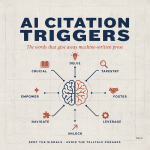
AI Citation Triggers

47 Copy Patterns That Make ChatGPT, Perplexity, Gemini, and Google AI Overviews Quote Your Content. How to Apply This Swipe File (Read This First) This is not a theory document. Every pattern in this file is designed to be copied, customized, and dropped into your existing website pages, blog posts, product pages, and about pages within minutes. Here is…

Read More

AI Answer Snippet Cheat Sheet

email validation mastery

Turn Any Web Page into an AI-Grabbable Answer Block in Under 10 Minutes. The Rapid-Fire Shortcut System for ChatGPT, Perplexity, Gemini, Copilot, and Google AI Overviews. How to Apply This Cheat Sheet (Read This First) This document is built to get you results fast. Here is the fastest path from “messy web page” to “AI-ready answer block” that search…

Read More

AI Citation Worthy Blogs

Blue Ocean Strategies with AI

How to Apply This Playbook (Read This First) This playbook is built around a single idea: AI answer engines like ChatGPT, Perplexity, Google AI Overviews, and Claude pull from web content that is structured in ways they can parse, quote, and attribute. If your blog posts feed those systems clean signals, you get cited. If they don’t, someone else…

Read More

Measuring & Optimizing

Business Opportunities

Chapter 13: Measuring, optimizing, and scaling your blog hub Key takeaways Measure both organic and AI visibility separately. They’ve decoupled: a page can lose rankings while gaining citations, or vice versa. Run the audit-optimize-measure loop monthly for the first 6 months, then quarterly. Each cycle identifies what’s working, what needs fixing, and where to expand. Don’t start a second…

Read More

Off-Site Extension

AI That Turns Emotion into Structure

Chapter 12: Extending your hub off-site Key takeaways A blog hub that exists only on your domain is incomplete. AI engines pull citations from across the web, and brand co-occurrence across multiple surfaces increases citation probability. Reddit (46.5% of Perplexity citations), YouTube (#1 most-cited domain in AI Overviews), and LinkedIn are the three most important off-site platforms for hub…

Read More

Where Blog Hubs Don’t Work

Monetize your content

Chapter 10: Where blog hubs don’t work (and what to do instead) Key takeaways Blog hubs don’t work for hyper-narrow micro-niches that can’t sustain 5+ subtopics. Go deep on one topic instead of broad across many. Single-location local services get more ROI from GBP optimization and reviews than from blog hubs. Save the hub for multi-location brands. Pure affiliate…

Read More

Blog Hubs for B2B

Blog Hubs for B2B

Chapter 9: Blog hubs for B2B SaaS, services, and professional firms Key takeaways B2B SaaS is the strongest natural fit for blog hubs. Long sales cycles, complex products, and research-heavy buyers create the perfect environment for topic clusters. The typical SaaS site can support 4-6 separate pillar hubs. Comparison articles are the highest-performing format for B2B AI citation (642%…

Read More

Technical Setup

Chapter 11: Technical setup across platforms Key takeaways WordPress provides the most complete hub building toolkit: custom URLs, categories, internal linking plugins (Link Whisper), and full schema support. Shopify works for ecommerce hubs if you use collection pages as pillars and add manual internal links. Complex hubs may need a headless CMS approach. Squarespace and Wix work for small…

Read More

Blog Hubs for Education

Blog Hub for Education sites

Chapter 8: Blog hubs for education, e-learning, and online courses Key takeaways Education and e-learning have the most natural fit with blog hubs because educational content is exactly what AI engines want to cite. The knowledge pyramid architecture works: pillar page as topic overview, cluster pages as individual lessons, course as the structured path through everything. Give away the…

Read More

error: Content is protected !!