Chapter 4: Planning Your Hub — topic research and cluster mapping
Key takeaways
- Choose a hub topic at the intersection of what you sell, what your buyers need to learn, and what AI engines are asked about. Too broad wastes effort. Too narrow can’t sustain a cluster.
- Mine subtopics from ChatGPT, AnswerThePublic, keyword tools, and Google’s “People Also Ask.” Long-tail questions often outperform high-volume keywords for AI citation.
- Build a cluster map spreadsheet before writing anything. Map every page’s title, primary question, and cross-links. This is your production plan.
- One search intent per page. If two pages answer the same question, merge them. Commercial intent goes to product/category pages; informational intent goes to the blog.
- Review your map for completeness: every important buyer question should have a home in the hub.
You now know what a blog hub looks like and why it works. The next step is choosing the right topic and mapping out the cluster pages before you write anything.
Planning is where most hubs either succeed or waste months on content that doesn’t get cited. Get the map right and the writing becomes straightforward.
Choosing your hub topic
Your hub topic should sit at the intersection of three things: what your business sells, what your buyers need to learn before buying, and what AI engines are already being asked about.
Miss any one of those and the hub either won’t drive revenue, won’t attract the right traffic, or won’t get cited.
Start with buyer questions. What does someone need to understand before they become your customer?
If you sell accounting software for restaurants, your buyers need to understand restaurant bookkeeping, tip tracking, POS integrations, tax compliance for food service, and payroll for tipped employees.
“Restaurant accounting” is your hub topic. Each of those buyer questions becomes a cluster page.
A common mistake is picking a topic that’s too broad.
“Accounting” would be a terrible hub topic for a restaurant accounting software company because you’d be competing against QuickBooks, Xero, and every accounting firm on the internet.
“Restaurant accounting” is narrow enough to own but broad enough to support 10-15 cluster pages. You want to be the definitive source on a topic you can realistically dominate.
Another common mistake is picking a topic that’s too far from your product.
A fitness equipment company writing a hub about nutrition science might attract readers, but those readers aren’t looking for exercise bikes.
Your hub topic should connect directly to what you sell, so that the AI engines make the association between your topic authority and your product.
Mining subtopics with AI and SEO tools
Once you have your hub topic, you need 8-15 subtopics for your cluster pages. There are several ways to generate these, and the best approach uses multiple sources.
ChatGPT is the fastest starting point. Ask it to list every question a potential buyer would have about your topic. Ask it to break the topic into subtopics. Ask it to generate variations.
You’ll typically get 20-30 ideas in a few minutes, of which 10-15 will be worth pursuing.
AnswerThePublic and AlsoAsked show you the actual questions people type into search engines about your topic.
These tools are useful because they surface question phrasings you might not have thought of, and question-style content is strongly correlated with AI citations (78.4% of citation-bearing answers map to question-style headings).
Ahrefs, Semrush, or any keyword research tool will show you search volume and competition data for each subtopic. You don’t need the highest-volume keywords.
In fact, lower-volume long-tail questions often perform better for AI citation because they match fan-out sub-queries more precisely.
A cluster page targeting “how much does restaurant payroll cost in Texas” might have minimal search volume but catch a very specific sub-query that ChatGPT generates when someone asks about restaurant accounting.
Google’s “People Also Ask” and “Related Searches” sections are another source.
Search for your hub topic, scroll through the related questions, and note which ones could sustain a full cluster page.
If a related question can be answered in one paragraph, it’s too narrow for a cluster page. Fold it into the pillar or another cluster.
If it needs 1,200+ words to answer properly, it’s a cluster candidate.
The cluster map spreadsheet method
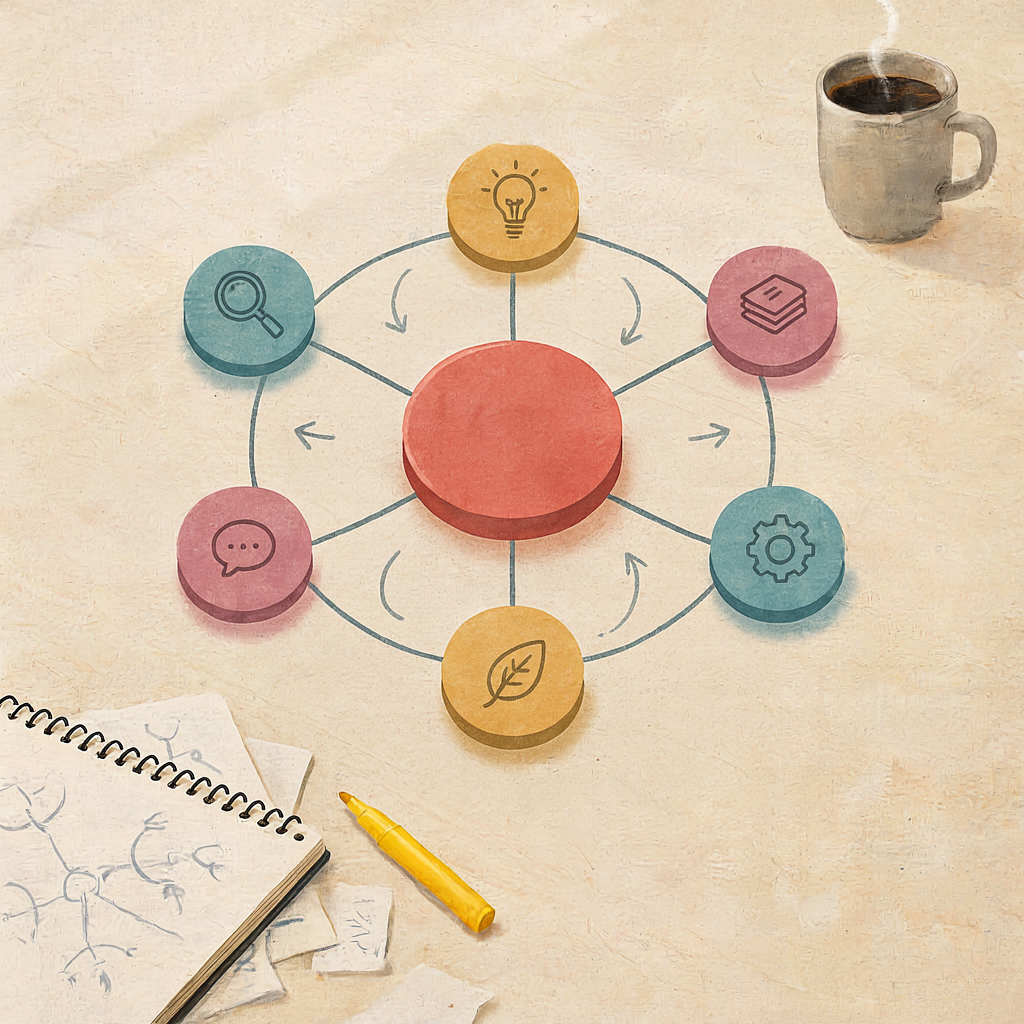
Before writing anything, build a cluster map. This is a simple spreadsheet that forces you to plan the entire hub before committing to content creation. Here’s the format:
| # | Page type | Title / topic | Primary question answered | Links to |
| 0 | Pillar | The complete guide to restaurant accounting | How does accounting work for restaurants? | All clusters (1-10) |
| 1 | Cluster | Restaurant bookkeeping basics | What does daily bookkeeping look like for a restaurant? | Pillar, #2, #3 |
| 2 | Cluster | Tip tracking and reporting for restaurants | How do restaurants track and report tips? | Pillar, #1, #5 |
| 3 | Cluster | POS system integration with accounting software | Which POS systems integrate with restaurant accounting tools? | Pillar, #1, #4 |
| 4 | Cluster | Restaurant payroll: taxes, tips, and compliance | How do restaurants handle payroll for tipped employees? | Pillar, #2, #3 |
| 5 | Cluster | Best accounting software for restaurants in 2026 | Which accounting software is best for restaurants? | Pillar, #3, #6 |
Fill in the entire map before writing. Review it for gaps: are there obvious buyer questions that aren’t covered? Are any two cluster pages targeting the same question?
Do the cross-links make logical sense? Adjust until the map feels complete but not bloated.
Avoiding cannibalization: one intent per page
Keyword cannibalization happens when two or more pages on your site compete for the same query.
In traditional SEO, this splits your ranking power and often means neither page ranks well.
In AEO, it’s equally damaging because AI engines may retrieve both pages, get confused by the overlap, and cite neither.
The rule is simple: one search intent per page. Before adding a cluster to your map, ask: “Is someone searching for this already adequately served by another page in my hub?”
If yes, merge the content. If the intents are different even though the keywords overlap, keep them separate but make the distinction clear in the titles and opening paragraphs.
For ecommerce specifically, Aleyda Solis offers a clear rule: map commercial intent (someone ready to buy) to your product or category pages, and map informational intent (someone researching) to your blog.
Never let a blog post and a category page compete for the same head term. They should complement each other with different intents, linked together.
| Exercise: Build your first cluster map
Open a spreadsheet. In column A, write your hub topic at the top. Below it, list 10-15 subtopics using the mining methods from this chapter. In column B, write the primary question each page will answer. In column C, note which other pages it should link to. Review the map: does every buyer question have a home? Is any question answered twice? Are the cross-links logical? This becomes your production plan for Chapters 5-9. |
| Prompt: Generate subtopics for your hub
Ask ChatGPT: “I’m building a content hub about [your hub topic] for my [type of business]. List 15-20 subtopics that would make strong individual blog posts. For each subtopic, include: the question it answers, who would search for it, and whether the intent is informational (learning) or commercial (buying). Focus on questions my potential customers would actually ask.” Use this output as the starting point for your cluster map spreadsheet. |
| Prompt: Check for cannibalization
Ask ChatGPT: “Here are the planned pages for my content hub: [list your page titles and primary questions]. Are any two pages targeting the same search intent? If so, which ones should be merged, and which ones are different enough to keep separate? Explain your reasoning.” This saves you from building pages that compete with each other. |
Chapter 4 Workbook
Chapter Summary
This chapter covers the planning phase that determines hub success or failure.
It explains how to choose a hub topic at the intersection of what you sell, what buyers need to learn, and what AI engines are asked about.
It covers subtopic mining methods (ChatGPT, AnswerThePublic, AlsoAsked, Ahrefs/Semrush, People Also Ask), the cluster map spreadsheet method, and the critical rule of one intent per page to avoid cannibalization.
The chapter emphasizes that planning the entire map before writing prevents months of wasted effort.
Key Concepts Checklist
Check off each concept as you understand it:
- I can identify a hub topic at the intersection of what I sell, what buyers need to learn, and what AI engines are asked
- I understand why a topic that’s too broad or too far from my product will fail
- I know how to use ChatGPT, AnswerThePublic, and keyword tools to mine subtopics
- I can build a cluster map spreadsheet with page type, title, primary question, and cross-links
- I understand the one-intent-per-page rule and how to avoid keyword cannibalization
- I know the difference between commercial intent (product pages) and informational intent (blog pages)
Exercises
Exercise 1: Define Your Hub Topic
Write your hub topic below. Test it against the three criteria: (1) connects to what you sell, (2) relates to what buyers need to learn, (3) people ask AI engines about it. Is it too broad? Too narrow?
────────────────────────────────────────────────────────────
────────────────────────────────────────────────────────────
────────────────────────────────────────────────────────────
Exercise 2: Mine 10 Subtopics
Using any method (brainstorming, ChatGPT, People Also Ask), list 10 subtopics for your hub. For each, write the primary question it answers and whether the intent is informational or commercial.
────────────────────────────────────────────────────────────
────────────────────────────────────────────────────────────
────────────────────────────────────────────────────────────
Exercise 3: Build a Mini Cluster Map
Create a 5-row cluster map with columns for: Page Type, Title, Primary Question, and Links To. Include your pillar and 4 cluster pages with cross-linking planned.
────────────────────────────────────────────────────────────
────────────────────────────────────────────────────────────
────────────────────────────────────────────────────────────
Exercise 4: Cannibalization Check
Review your 10 subtopics from Exercise 2. Are any two targeting the same search intent? If so, note which ones should be merged and explain why.
────────────────────────────────────────────────────────────
────────────────────────────────────────────────────────────
────────────────────────────────────────────────────────────
Quiz
1. Your hub topic should sit at the intersection of which three things?
A) Cost, time, and effort
B) What you sell, what buyers learn, what AI is asked
C) Keywords, backlinks, and domain authority
D) Traffic volume, competition, and conversion rate
2. What percentage of citation-bearing answers map to content with question-style headings?
A) 2%
B) 7%
C) 4%
D) 3%
3. According to Aleyda Solis, commercial-intent queries should be mapped to:
A) Blog posts
B) Product or category pages
C) The homepage
D) External landing pages
4. How many subtopics should you initially plan for your cluster pages?
A) 3-5
B) 8-15
C) 20-30
D) 30-50
5. What is the recommended approach before writing any hub content?
A) Write the pillar page first and see what topics emerge
B) Build a complete cluster map spreadsheet
C) Publish 3 test posts and measure which performs best
D) Wait for Google Search Console data to guide topics
Answer Key
| 1. B | 2. C | 3. B | 4. B | 5. B |
Action Steps
- Finalize your hub topic using the three-criteria test
- Generate 15-20 subtopic candidates using at least 3 different mining methods
- Build your complete cluster map spreadsheet with all columns filled in
- Run a cannibalization check: ensure no two pages target the same intent
- Validate your map by checking that every important buyer question has a home in the hub
Reflection
What’s the one topic where you could realistically become the best source on the internet—not the biggest, but the most thorough and trustworthy for a specific audience?
────────────────────────────────────────────────────────────
────────────────────────────────────────────────────────────
────────────────────────────────────────────────────────────
If you asked your last 10 customers what they researched before buying from you, what questions would they list? How well does your cluster map cover those questions?
────────────────────────────────────────────────────────────
────────────────────────────────────────────────────────────
────────────────────────────────────────────────────────────