
How AI Engines Use Query Fan-Out to Find Your Content
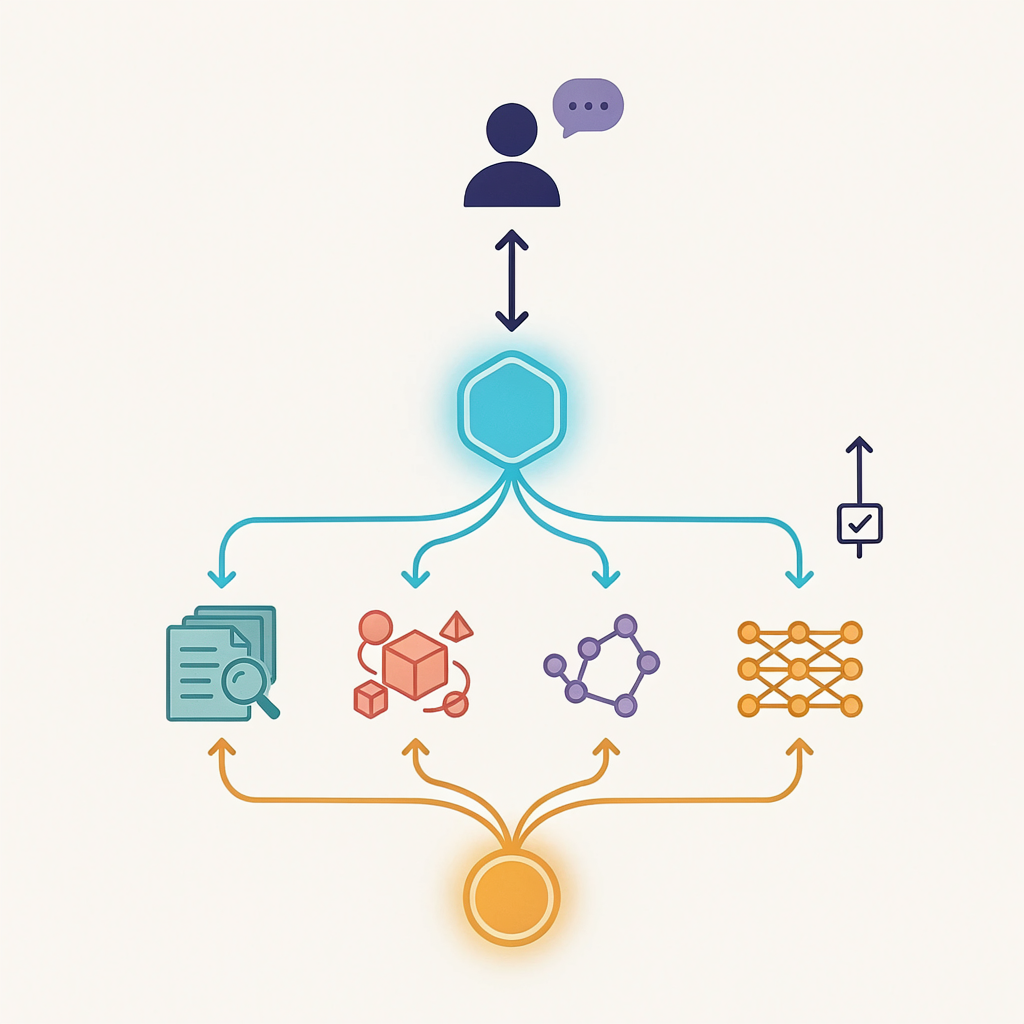
When someone types a question into ChatGPT, the system breaks it into 2-15 sub-queries and retrieves separate web pages for each one, which is why blog hubs with multiple cluster pages catch more citations than single articles.
What Happens When Someone Asks ChatGPT a Question?
You type a question into ChatGPT or Perplexity. Behind the scenes, something called Retrieval-Augmented Generation (RAG) kicks in.
The AI doesn’t just search the web for your exact question.
It first analyzes what you’re really asking, identifies the different pieces of information it needs, and then sends out multiple search queries to find answers to each piece.
This process happens in milliseconds, but it determines which websites get cited and which get ignored.
Here’s what matters for your content strategy: the AI system treats your original question as a starting point, not as the final search.
If you ask “how do I build a blog hub for AI optimization,” the system might generate sub-queries about blog hub structure, internal linking best practices, content length for AI citations, topic cluster models, and pillar page formatting.
Each sub-query pulls different web pages into the context window. Your content either shows up in those results or it doesn’t.
How Does Query Decomposition Create Multiple Sub-Queries?
Query decomposition is the technical term for what happens when an AI breaks your question apart. A complex question gets split into anywhere from 2 to 15 separate sub-queries.
Each sub-query runs independently through the retrieval system. The AI then synthesizes answers from all retrieved pages into one coherent response.
This means a single user question creates multiple opportunities for your content to appear.
AirOps ran a study analyzing 815,000 query-page pairs across multiple AI systems. They found that the decomposition process creates search patterns that no human would use.
The AI generates highly specific, oddly phrased sub-queries that match long-tail content perfectly.
A page titled “what internal linking ratio works for topic clusters” might never rank on Google for a broad query, but it could match perfectly with one of ChatGPT’s decomposed sub-queries.
This is where blog hubs gain their structural advantage.
What Is the Raffle Ticket Model for AI Citations?
Mike King at iPullRank introduced a useful way to think about this. He calls it the raffle ticket model.
Every page on your website that could potentially match a sub-query is one raffle ticket in the drawing. If you have a single blog post about your topic, you hold one ticket.
If you have a blog hub with 12 cluster pages, you hold 12 tickets. The drawing happens every time someone asks an AI a question related to your topic.
The math works in your favor as you add pages. But there’s a catch: each ticket needs to be a genuine, focused answer to a specific question.
You can’t just split one article into 12 thin pages and expect results. Each cluster page needs to cover a distinct subtopic with enough depth that the AI retrieval system considers it a legitimate source.
Twelve strong cluster pages give you 12 real chances. Twelve weak pages give you nothing but maintenance headaches.
Why Do 32.9% of Cited Pages Only Appear in Sub-Query Results?
The AirOps study revealed something surprising: 32.9% of pages that AI systems cite only appear in the results for decomposed sub-queries.
They never show up for the original user question at all. This means almost a third of all AI citations go to pages that would be invisible if the AI only searched for the original query.
Your cluster pages don’t need to match the big broad question. They just need to match one of the sub-queries.
Ahrefs confirmed a related finding: 31% of pages cited by AI systems don’t rank in Google’s top 100 for the original query.
These pages have zero traditional SEO visibility for that search term. Yet they get cited because query fan-out finds them through side doors.
This completely changes how you should think about keyword targeting. You’re not just writing for the main query anymore.
You’re writing for the sub-queries that AI systems will generate from that main query.
How Can You Position Your Hub for Maximum Fan-Out Coverage?
Start by brainstorming every sub-question someone might have about your pillar topic. Don’t just think about what a human would search on Google.
Think about what an AI system would need to know to fully answer a complex question.
If your pillar topic is “email marketing automation,” your cluster pages should cover specific tools, pricing comparisons, workflow templates, deliverability metrics, segmentation strategies, and A/B testing methods.
Each page catches a different sub-query.
Make each cluster page answerable. Structure it around one clear question in the H1, provide a direct answer in the first paragraph, then expand with details and examples below.
AI retrieval systems favor pages that give a clear, extractable answer quickly. Long introductions and rambling setups push your actual answer below the extraction threshold.
Put your best content first, support it second, and link back to the pillar page so the AI system can see your hub’s full topical coverage.
Map out the 10-15 sub-queries an AI would generate from your main topic, then build one cluster page for each.