Challenge 7: Content Pillars & Clusters for Monetization
A successful blog isn’t just a collection of random posts.
To consistently drive traffic and convert readers into paying customers, your content must be structured around a clear, strategic framework.
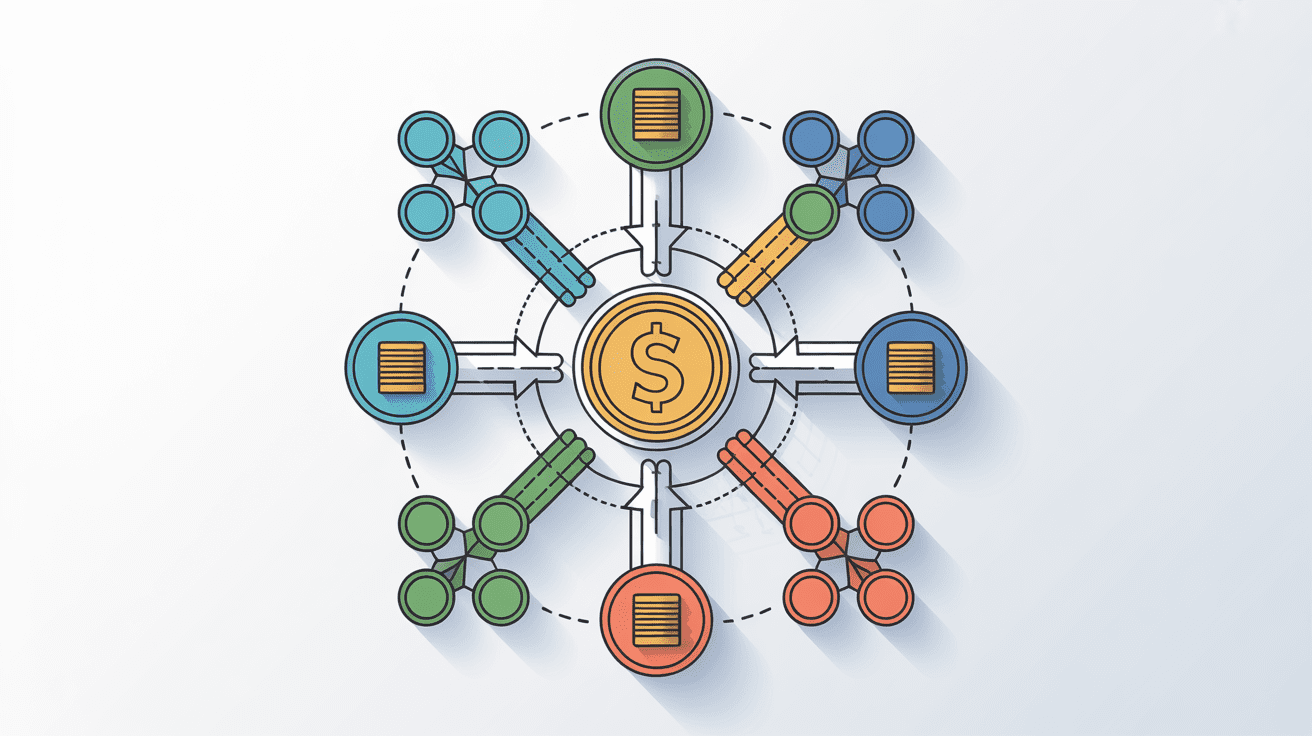
Content pillars and clusters provide that framework. A content pillar is a high-value, authoritative post that serves as the centerpiece for a specific topic on your blog.
Cluster content consists of smaller, supporting posts that link back to the pillar and address subtopics or questions related to it.
Together, they create a web of interlinked content that boosts search engine rankings, attracts targeted traffic, and funnels readers toward monetization opportunities.
Content pillars and clusters aren’t just a way to organize your blog.
They’re a system for ensuring every piece of content serves a purpose—whether that’s building authority, attracting a specific audience, or driving revenue.
By designing content pillars around profitable topics and mapping out clusters with monetization in mind, you can maximize your blog’s earning potential.
ChatGPT can help you not only identify these profitable topics but also structure your pillars and clusters effectively, making it easier to build a blog that works as a revenue-generating machine.
Step 1: Identify Profitable Content Pillar Topics
The first step is selecting content pillar topics that align with both your niche and your monetization goals.
These topics should have broad appeal, significant search volume, and plenty of opportunities for cluster content.
Profitable content pillars address core interests of your audience while naturally incorporating monetization, such as affiliate links, digital products, or lead magnets.
For example, if your blog focuses on survival, a content pillar could be “The Ultimate Guide to Emergency Preparedness.”
This topic has wide appeal, is evergreen, and offers numerous monetization opportunities through affiliate links for survival gear, downloadable checklists, and related courses.
Using ChatGPT to Identify Pillar Topics: ChatGPT can help you brainstorm pillar topics based on your niche and monetization strategy.
Example Prompt: “I run a survival blog and want to create content pillars. What are some high-level topics that have strong monetization potential?”
ChatGPT Output (Example):
- “The Ultimate Emergency Preparedness Checklist”
- “How to Build the Perfect Bug-Out Bag”
- “Survival Skills Every Beginner Needs to Learn”
- “Off-Grid Living: Essential Tools and Strategies”
- “Best Survival Foods for Long-Term Storage”
These topics provide a foundation for your blog, each with opportunities for monetization through affiliate products, eBooks, or courses.
Step 2: Map Out Cluster Content
Once you’ve identified your content pillars, the next step is creating clusters of supporting posts.
Cluster content dives deeper into subtopics related to your pillar, answering specific questions or providing actionable advice.
Each cluster post links back to the pillar, reinforcing its authority and signaling to search engines that your blog comprehensively covers the topic.
For example, if your pillar post is “The Ultimate Guide to Emergency Preparedness,” your cluster content might include:
- “Top 10 Must-Have Items for Your Emergency Kit”
- “How to Store Water for Long-Term Use”
- “Budget-Friendly Survival Gear for Beginners”
- “Preparing for Natural Disasters: A Step-by-Step Guide”
- “How to Create a Family Emergency Plan”
Each of these posts addresses a specific question or need while driving traffic back to your pillar. Together, they create a seamless experience for readers while boosting SEO.
Using ChatGPT to Generate Cluster Ideas: ChatGPT can quickly generate cluster content ideas tailored to your pillar topics.
Example Prompt: “My pillar post is ‘How to Build the Perfect Bug-Out Bag.’ What are some supporting blog post ideas I can create as cluster content?”
ChatGPT Output (Example):
- “Best Multi-Tools for Your Bug-Out Bag”
- “How to Choose the Right Backpack for Emergency Preparedness”
- “Top 5 Compact Survival Kits to Include in Your Bag”
- “Essential First Aid Supplies for a Bug-Out Bag”
- “How to Pack Food for Long-Term Storage and Portability”
These ideas address subtopics that link naturally back to the pillar post, driving traffic and strengthening your blog’s authority.
Step 3: Design Your Pillar and Cluster Content With Monetization in Mind
For a content pillar strategy to be profitable, each post—both pillars and clusters—needs to align with a monetization goal.
This means integrating affiliate links, promoting digital products, or encouraging email sign-ups at key points throughout your content.
Monetization Strategies for Pillar Content: Pillar posts are ideal for promoting higher-ticket items or comprehensive resources, as they are designed to be detailed and authoritative.
For example:
- “The Ultimate Emergency Preparedness Checklist” could include affiliate links to premium survival gear like water filters, multi-tools, or first aid kits.
- It could also feature a lead magnet, such as a downloadable printable checklist, that captures email addresses for further monetization through an email sequence.
- Additionally, you could sell a digital product, like an eBook or online course, directly from the pillar post.
Monetization Strategies for Cluster Content: Cluster posts are perfect for promoting specific products, services, or tools that relate to the subtopic. For example:
- “Top 10 Must-Have Items for Your Emergency Kit” could include affiliate links to each recommended item.
- “How to Store Water for Long-Term Use” might link to water storage containers or purification tablets.
- “Budget-Friendly Survival Gear for Beginners” could promote affordable gear options with affiliate links or a downloadable guide for purchase.
Each cluster post should also link back to the pillar, ensuring that traffic flows through the entire content ecosystem and increases the visibility of monetized elements.
Using ChatGPT to Plan Monetization: ChatGPT can suggest monetization opportunities for each post in your pillar and cluster strategy.
Example Prompt: “For a blog post titled ‘Best Multi-Tools for Your Bug-Out Bag,’ how can I include monetization opportunities?”
ChatGPT Output (Example):
- Include affiliate links to top-rated multi-tools with a brief review of each.
- Create a downloadable comparison chart of multi-tool features and offer it as a lead magnet.
- Add a CTA linking to a premium eBook or course about survival gear selection.
Step 4: Structure Your Content for SEO and Engagement
For your pillar and cluster strategy to succeed, your content needs to be optimized for search engines and engaging for readers.
This means using keywords effectively, ensuring your posts are easy to read, and linking strategically between your pillars and clusters.
Using ChatGPT for SEO Optimization: ChatGPT can help you identify keywords and structure your posts for maximum impact.
Example Prompt: “For the blog post ‘How to Store Water for Long-Term Use,’ create an optimized outline with suggested headings and subheadings.”
ChatGPT Output (Example Outline):
- Introduction: Why Water Storage Is Essential for Emergency Preparedness
- Section 1: Types of Water Storage Containers (Include affiliate links to products.)
- Section 2: How Much Water Do You Need? (Link to a water consumption calculator or guide.)
- Section 3: Best Practices for Long-Term Water Storage
- Section 4: Water Purification Methods (Monetization opportunity: affiliate links to purification tablets or filters.)
- Conclusion: CTA for a downloadable water storage checklist or eBook.
By structuring your posts this way, you ensure that they are both engaging for readers and primed to rank well in search results.
Step 5: Track and Optimize Your Pillar Strategy
Once your pillars and clusters are live, use analytics tools to track their performance.
Monitor metrics like traffic, time on page, and conversions to see which posts are driving the most profit.
ChatGPT can help you identify areas for improvement and suggest updates to keep your content relevant and effective.
Example Prompt: “My pillar post ‘The Ultimate Emergency Preparedness Checklist’ is getting traffic but low conversions. How can I improve it to increase monetization?”
ChatGPT Output (Example Suggestions):
- Add more compelling CTAs for affiliate products, emphasizing their benefits.
- Include a limited-time offer for a related digital product, like an eBook.
- Improve the introduction to highlight the urgency of being prepared.
- Add testimonials or user reviews for the recommended products.
By refining your content based on performance, you ensure that your pillar and cluster strategy continues to generate traffic and revenue over time.
A content pillar and cluster strategy is more than just a way to organize your blog. It’s a system for building authority, driving traffic, and maximizing profit.
By using ChatGPT to identify profitable pillar topics, generate cluster ideas, and plan monetization opportunities, you can create a content framework that works as a revenue-generating machine.
Each pillar and cluster post reinforces the other, creating a cohesive ecosystem that attracts readers, keeps them engaged, and funnels them toward your monetization goals.
With the right strategy in place, your blog can grow into a thriving business with consistent and scalable income.