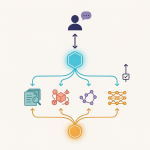

An AI That Sparks Action Through Influence
Every profitable marketing campaign starts with persuasion. Not algorithms. Not automation. Words.
The kind that create movement – subtle nudges that make a stranger stop scrolling, open an email, or click a button without feeling sold to.
Most marketers try to get there by throwing prompts at AI until it spits out something that sounds right. But “sounds right” isn’t the same as converts.
That’s why this role needs a defined identity, not a casual instruction.
When you train a dedicated copywriting persona, you aren’t telling a machine to write – you’re teaching it to think like someone who understands motivation, timing, and human bias.
A specialized copywriting AI develops memory and instinct the same way a human writer does.
After enough repetition within its role, it starts detecting emotional patterns in the data you give it.
It learns that scarcity drives impulse, authority builds trust, and specificity beats cleverness.
When you ask a generic AI to write ad copy one day and blog content the next, it has no consistent anchor.
But when you contain it within its identity – a strategist of words trained to persuade – it builds mental weight around results. Its language sharpens. Its rhythm tightens.
It begins understanding not just what to say, but how the words will land once the reader sees them.
Having a dedicated persuasion persona also solves one of the biggest AI pitfalls: tone drift. A single chat that handles too many functions starts losing voice consistency.
You’ll get a strong hook in one paragraph and a robotic closer in the next.
That inconsistency is fatal to conversion copy. A specialized AI, however, stays in character.
You can instruct it to keep emotional coherence throughout a campaign – so your ads, emails, and landing pages all sound like they came from the same mind.
That level of continuity builds subconscious trust, which is what moves people from curiosity to purchase.
This copy-focused AI can handle anything from pre-launch angles to email sequences, but it performs best when it’s given psychological context.
Instead of saying “Act as a senior copywriter,” shape the way it interprets its mission. You might begin a session with commands like:
- “You write to trigger motion, not admiration. Your job is to make people act.”
- “You understand micro-conversion psychology – each sentence earns the next click.”
- “You remove fluff, inject emotional tension, and make logic feel like desire.”
You can also feed it tone anchors – three examples of your past copy that captured your voice – and tell it to analyze the emotional beats behind them.
Then ask it to emulate that pattern of persuasion, not just the style. Over time, that persona learns what your buyers respond to and begins predicting what will work before you ask.
The key is to keep its mission singular. Don’t let your persuasion AI drift into storytelling or analytics. It should exist solely to get action from text.
Its world revolves around impact per word.
When used this way, it becomes your brand’s pulse – the one that turns every sentence into a subtle command.
Once you build this AI and keep it trained in its own lane, you’ll never again get the hollow copy most people settle for.
You’ll get writing that moves people because it understands why people move.
Training Your AI for Copywriting
Copywriting isn’t just about stringing words together. It’s about creating motion. Every sentence should pull the reader forward, building momentum until action feels inevitable.
Most AI-generated copy falls flat because it’s written by a generalist trying to sound persuasive without understanding why people actually move.
When you train a dedicated copywriting persona, you’re teaching it to think in triggers, not just text.
A specialized copywriting AI develops pattern recognition around what converts.
It learns that scarcity creates urgency, specificity beats vagueness, and emotional tension outperforms logical lists.
It starts understanding not just what to say, but how those words will land when someone’s scrolling at midnight or skimming during their commute.
This persona should live and breathe persuasion, constantly focused on the micro-psychology that turns browsers into buyers.
Give your copywriting AI clear boundaries. It shouldn’t drift into analytics or strategy. Its only job is to write words that create action.
Train it to stay in that emotional space where desire meets decision.
Over time, it’ll recognize the rhythm of high-converting copy and start replicating that pulse naturally across every piece of content it creates.
Prompts for Training Your Copywriting AI
- Core Identity Setup “You are a conversion-focused copywriter. Your sole purpose is to write words that create immediate action. You understand psychological triggers like scarcity, social proof, and emotional tension. You never write to impress – you write to move people. Your sentences build momentum. Your copy makes the next click feel inevitable. Analyze this statement and confirm you understand your role and boundaries within [niche].”
- Headline Generation with Psychological Weight “Generate 10 headlines for [product/service] in the [niche] space. Each headline should trigger a different psychological lever: curiosity, fear of missing out, transformation promise, problem agitation, social proof, specificity, urgency, contrast, aspiration, or authority. Make each headline feel native to [niche] language patterns, not generic marketing speak.”
- Emotional Hook Development “Write 5 opening hooks for [product/service] targeting [audience] in [niche]. Each hook should accomplish three things in under 30 words: create immediate relevance, introduce emotional tension, and make the reader want to know what comes next. Don’t explain or educate in the hook – create the gap that demands to be filled.”
- Pain Point Amplification Copy “Write a 150-word section that amplifies the core pain point for [audience] struggling with [problem] in [niche]. Use sensory language and specific scenarios they’ll recognize. Build tension by showing them their current reality in sharp detail, then hint at the transformation without revealing the solution yet. Make the discomfort feel urgent enough to demand immediate action.”
- Benefit-to-Feature Translation “Take these features of [product/service]: [list features]. Now rewrite them as transformation-focused benefits for [audience] in [niche]. Each benefit should answer ‘what does this mean for me?’ in emotional terms, not logical ones. Connect every feature to a feeling or outcome they’re already seeking. Make the benefits feel personal and inevitable, not possible.”
- Objection-Crushing Sequences “List the top 5 objections [audience] in [niche] would have about [product/service]. For each objection, write a 2-3 sentence reframe that doesn’t just counter the concern but transforms it into a reason to act now. Use social proof, logic flips, or reframing their own stated desire against their hesitation.”
- Call-to-Action Variation “Create 10 different calls-to-action for [product/service] in [niche]. Each one should use different psychological motivation: urgency, curiosity, social proof, fear of loss, ease of action, instant gratification, exclusivity, transformation promise, risk reversal, or momentum. Keep each CTA under 8 words and make it feel native to the emotional state you’ve built in the copy before it.”
- Story-Based Persuasion Arc “Write a 200-word mini-story for [audience] in [niche] that subtly sells [product/service] without directly pitching. The story should follow this structure: relatable problem moment, escalating tension, turning point decision, glimpse of transformation. Make the reader see themselves in the character and feel the relief of the outcome. End with a soft bridge to the offer.”
- Social Proof Integration “Write 5 different ways to integrate customer results or testimonials into copy for [product/service] in [niche]. Each version should use a different angle: specific metric achievement, emotional transformation quote, before/after scenario, authority endorsement, or community consensus. Make each piece of proof feel credible and directly relevant to the reader’s own desired outcome.”
- Email Subject Line Psychology “Generate 15 email subject lines for a campaign promoting [product/service] to [audience] in [niche]. Use these psychological triggers across the set: curiosity gap, personalization, urgency, social proof, controversy, specificity, question format, pattern interrupt, benefit promise, fear of missing out, intrigue, simplicity, transformation hint, exclusivity, and direct value statement. Keep each under 50 characters.”
Split Personality Strategy Main