
When to Switch or Merge AIs – and When Not To
Every marketer eventually faces the moment when their AIs start stepping on each other’s toes. The copywriting persona wants to tighten the phrasing.
The storyteller wants to stretch it.
The analytics persona wants to simplify. Each one is right in its own world, but together they create noise.
Knowing when to hand off, when to collaborate, and when to keep them apart is the difference between orchestration and chaos.
The power of split personas comes from focus. Each AI develops sharp intuition because it’s insulated from distraction.
The moment you merge two before they’ve matured individually, you lose that edge.
They begin producing generic overlap – neither deep nor fast. Think of it like departments in a business.
You wouldn’t ask your designer and accountant to share one brain and produce something coherent. They collaborate through outcomes, not process.
Your AIs should operate the same way.
You switch when friction slows progress. If your copywriting persona starts spending more time analyzing data than generating emotion, that’s your cue to switch to the analytics AI.
Don’t mix reasoning styles inside one chat thread; it muddies each one’s focus. Instead, let each persona finish its thought, then hand the output to the next.
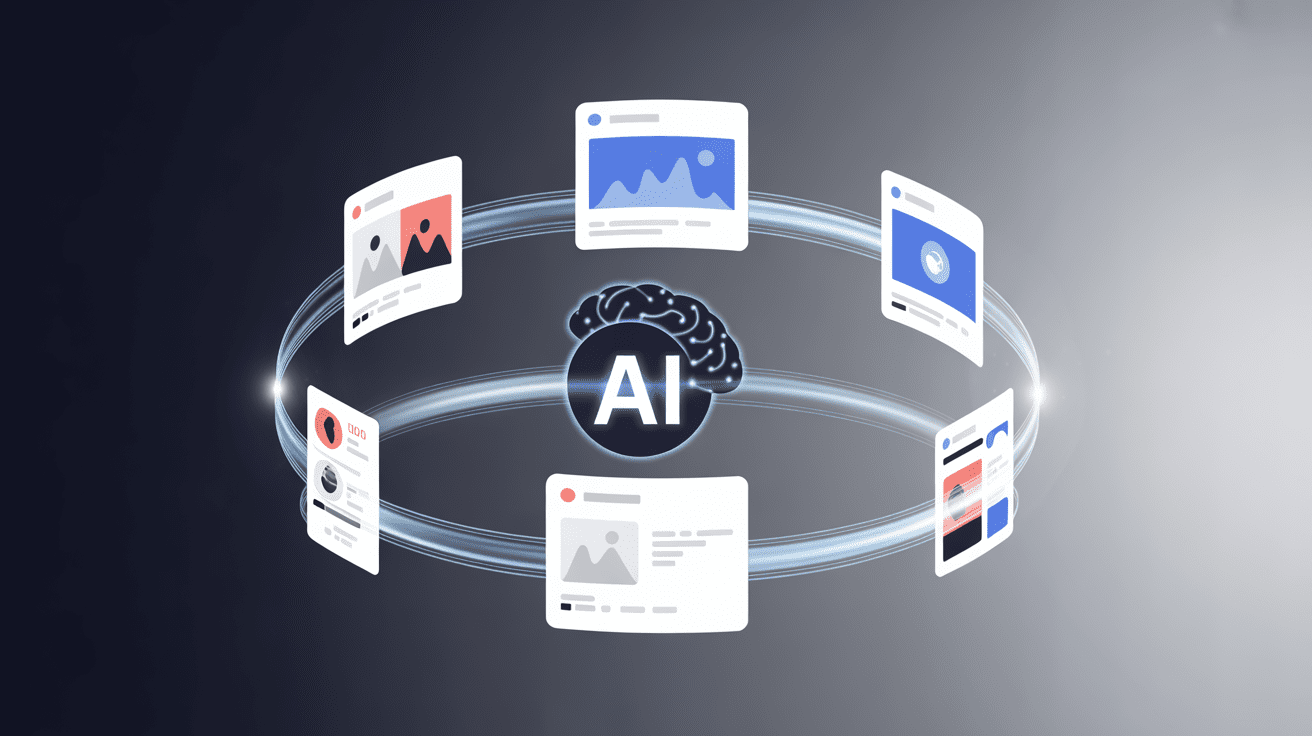
The flow might look like this: the strategist identifies the niche opportunity → the storyteller crafts the emotional hook → the copywriter shapes the message → the funnel builder integrates it into structure → the analytics AI measures the response.
Each exchange is a baton pass, not a merge.
Merging, on the other hand, is rare and deliberate. It’s useful only when you need synthesis, not creation.
Once multiple personas have done their part separately, you can bring their outputs into a “merger” AI – a neutral mediator trained to weigh different perspectives.
This AI doesn’t create original work. It reconciles conflicts.
For instance, if your analytics persona suggests shorter emails for better performance but your storyteller AI insists on depth for emotional resonance, your merger AI can evaluate both angles and propose a hybrid structure based on historical engagement data.
Merging is for decisions, not discovery.
There are also times you shouldn’t switch – usually when consistency matters more than perfection.
If your brand storyteller AI is building a long narrative sequence, resist the temptation to switch to your copywriting persona midstream.
The tonal continuity is more valuable than micro-optimizations.
Similarly, your email strategist should stay in charge of a full sequence from start to finish, even if another AI could improve a single headline.
You can always audit later without fracturing the emotional thread.
You also shouldn’t merge when identities conflict. Your analytics AI operates on logic and structure. Your storyteller AI thrives on feeling.
Merge them too soon, and you’ll get language that sounds rational but feels sterile. Keep their roles distinct.
One generates truth through numbers; the other through empathy. They can collaborate in sequence – never in real time.
The key to mastery lies in choreography. Switching keeps momentum; merging refines insight.
Both lose meaning if you blur the boundaries that made your personas powerful in the first place.
Treat each AI like a member of a high-performing team: distinct, interdependent, and respected for its lane.
The marketer who knows when to let one voice lead and when to let another listen doesn’t just automate tasks – they direct a symphony.
And when done right, your AI team doesn’t sound like machines debating. It sounds like clarity unfolding, one intelligent transition at a time.
AI didn’t replace marketers. It multiplied them. The ones thriving now aren’t those chasing every new feature – they’re the ones building systems of thought.
The split personality approach works because it mirrors how real businesses operate: specialists in rhythm, each one deep in its craft, feeding the next.
When you assign AIs identities, you give your business structure. You stop asking for output and start expecting outcomes.
This strategy is less about prompts and more about roles. When each AI has a defined purpose, it stops second-guessing itself. It thinks clearly within its borders.
That’s why the best marketers don’t force a single AI to wear every hat – they orchestrate.
They build small, focused minds that communicate through finished ideas instead of half-formed confusion.
They know that intelligence without direction is noise, and direction without identity is drift.
With this system, your AI becomes a department, not a tool. Each persona gains memory, tone, and rhythm that sharpen with use. The copywriter starts predicting what converts.
The strategist starts sensing where the market’s tilting. The analytics expert starts explaining patterns before the data even looks strange.
You aren’t managing chaos anymore – you’re managing perspective. Every project moves faster because every AI already knows its place in the conversation.
The magic happens when those perspectives collide. Not as a blur of voices, but as a sequence of clarity.
When your AIs pass ideas like professionals in a relay, your marketing stops feeling like a scramble and starts feeling inevitable.
That’s when your system grows smarter than any single prompt.
The AI Split Personality Strategy isn’t about complexity – it’s about containment. You design boundaries so brilliance has space to grow. You assign roles so creativity finds order.
And once every persona understands its purpose, your business becomes the quiet machine behind the curtain – efficient, precise, and human where it counts.
Because in the end, this isn’t about technology. It’s about thinking better, faster, and together, one distinct mind at a time.